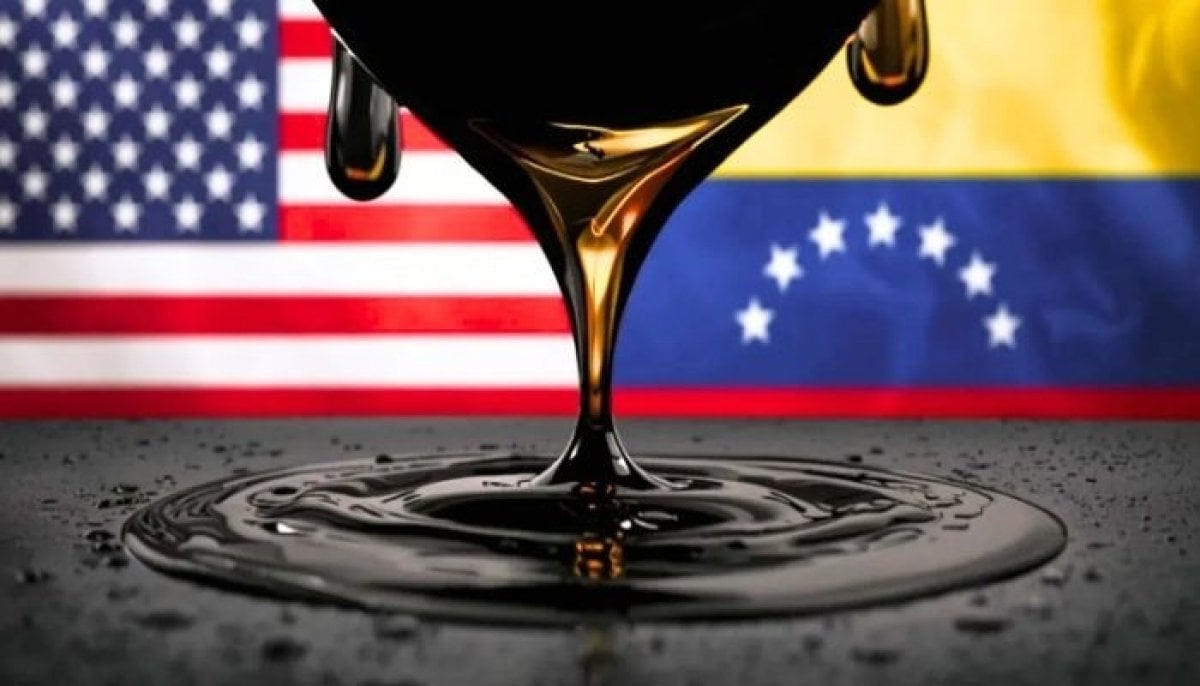
On the evening of August 28, President Trump announced on Truth Social what he called the biggest oil deal in world history, a sweeping agreement handing a new United States linked venture majority control over more than 65 billion barrels of Venezuela’s proven oil reserves, structured as 100 year development rights across 17 fields in the Orinoco Belt and Lake Maracaibo. The framing that traveled with it was explicit, that the transaction more than doubles American oil reserves and will substantially lower gas prices for all Americans long into the future. Headlines took the reserve number at face value, which is the mistake, because that number hides two separate problems. The first is flow. A barrel counted as a reserve is not a barrel at a refinery, and in Venezuela the two are decades apart. The second is the reserve number itself. The 65 billion, and the 300 billion it comes from, was never independently proven, and it does not hold up once you look at how the figure was built.
Stock Is Not Flow
Begin with the distinction the announcement erases. A reserve is a quantity of oil judged to exist and to be recoverable; production is the rate at which that oil actually comes out of the ground, and only the rate reaches a market or a pump. Venezuela is the cleanest illustration on earth of how far the two can drift apart, because it sits on the largest reserve base in the world and pumps only about 1.25 million barrels a day, less than half of what it produced in the late 1990s, out of a country whose upstream has been decaying for twenty years. A signing ceremony does not change any of that, because the binding constraint was never below ground. The oil is shallow, mapped, and carries almost no exploration risk; the entire problem lives above ground, in the hardware and the people required to lift heavy crude and move it, and that is what sets the clock.
It helps to stop treating “Venezuela oil” as one thing, because it is two resources on two timelines. The western basin around Lake Maracaibo is conventional medium to heavy crude, the century old fields that need little or no dilution and whose infrastructure held up comparatively well; that is the near term barrel. The eastern Orinoco Belt is where the 65 billion and the headline reserves actually sit, and it is not conventional oil in any working sense. It comes out of the reservoir at 8 to 10 degrees API, a near solid bitumen that will not move through a pipe on its own. Everything fast about this story is Maracaibo and existing wells; everything slow about it is Orinoco.
The fast phase is well rehabilitation, and it is fast precisely because it develops nothing. A workover cleans out an existing wellbore, replaces the downhole pump, restores lift and power, and turns a well that already produced back on. This is the entire reason output climbed from just under 1 million to roughly 1.25 million barrels a day, and it was led overwhelmingly by Chevron reactivating known wells after sanctions relief, not by rigs drilling new ones. Run the existing well stock through workovers with diluent flowing and output can plausibly climb toward 2 million barrels a day over two to three years, with diminishing returns as the best wells are worked first. None of that touches the 65 billion barrels; it recovers barrels that were already developed and then abandoned. The easy oil is close to back.
Beyond that, money doesn’t buy speed, because extra heavy production is a system and the system is broken in four specific places. Power comes first, because heavy oil lift, any thermal handling, and the upgraders are all electricity intensive, and Venezuela’s grid browns out; a well or an upgrader that trips every time the grid sags produces nothing, and restoring stable generation and transmission to the oil regions is measured in years. Diluent is second, and it is a physical hard stop rather than a preference, because Orinoco blend, the export grade known as Merey, is roughly 60% extra heavy crude cut with about 40% light diluent simply to become pumpable; every million barrels a day of Orinoco output therefore requires on the order of 400,000 barrels a day of naphtha or condensate, which is why the United States is currently shipping naphtha south, and why a diluent interruption does not slow production, it stops it. Third is the processing and midstream chain, the upgraders that convert extra heavy crude into synthetic crude, roughly 600,000 barrels a day of nameplate capacity that sits largely idle after years of deferred maintenance and needs full turnarounds, not a switch, to restart, alongside the pipelines and terminals that decayed with it. Fourth is human capital, because something on the order of 18,000 skilled workers left over the last decade, and reservoir management and heavy oil operations expertise does not return with a signing bonus; every repair above runs at the pace that trained crews and available equipment allow, which is why throwing capital at the problem past a point produces bottlenecks and inflation rather than barrels.
Only after that backbone is whole does new drilling meaningfully draw down the reserve, and here the Permian analogy that keeps getting invoked fails on a single point, that a Permian light sweet barrel flows and sells the day it is drilled, while an Orinoco barrel is not a product until the entire heavy oil chain has been wrapped around it. Recovery is the quiet killer, because cold production on extra heavy crude recovers only single digits to low teens as a percentage of the oil in place, so pulling the resource at meaningful rates eventually requires thermal recovery, steam projects that are among the most capital heavy and slowest to build assets in the industry. From a final investment decision to first oil on a new Orinoco project is three to five years in a functioning country and longer here, and ramping the belt to add millions of barrels is a ten to fifteen year, hundred billion dollar order program that only pencils while oil stays high enough to justify upgrading the crude. Producing the bulk of the 65 billion barrels is a multi decade exercise, which is exactly why the paperwork was written to run a hundred years.
The Reserve Illusion
The flow problem would be damning enough on its own, but the reserve figure underneath it is softer than the flow problem suggests, because the 65 billion, and the roughly 300 billion it belongs to, does not come from an independent count. It comes from the Venezuelan government and PDVSA, routed through OPEC, which does not audit what its members self report, and then republished by the EIA, which passes OPEC through; so the reassuring phrase “300 billion barrels, corroborated by the EIA” is not corroboration at all, it is a single self reported number handed down a chain that never verifies it. A fact check searching specifically for a transparent third party audit reconciling Venezuela’s proven reserves found that none exists.
The history is the tell. Venezuela’s proven reserves sat near 60 billion barrels through the 1980s and 1990s and around 77 to 80 billion by 2005, mostly conventional crude, which placed the country roughly eighth in the world. Then, between 2005 and 2011, the figure nearly quadrupled to almost 300 billion, with no major discoveries and no surge in production to justify it, when the Magna Reserva initiative under Chávez reclassified Orinoco Belt extra heavy oil from resources into proved reserves; the transformation, as Robert Rapier has put it, was statistical rather than physical. High crude prices in 2007 supplied the accounting cover, and OPEC quota politics, in which quotas track reserves, supplied the incentive. The number rose because it was useful.
Set the independent work against it and the range is extraordinary, because three different numbers describe the same rock and none of them is interchangeable with the others. The United States Geological Survey, in a genuinely independent 2009 assessment, put more than 1 trillion barrels of heavy oil in place in the Orinoco Belt and a mean of 513 billion barrels technically recoverable, with a range of 380 to 652 billion; that is the largest figure in the debate and the one bulls reach for, yet the USGS labeled it technically recoverable and undiscovered resources, explicitly not proven, and technically recoverable ignores cost entirely. At the other end, Rystad Energy, the one major independent house that applies an economic screen rather than accepting the reclassification, estimates Venezuela’s economically recoverable oil at roughly 29 billion barrels, about one tenth of the official figure. So the same resource reads as more than a trillion barrels in place, about 513 billion recoverable at any cost, and perhaps 29 billion recoverable at prices that actually clear, and Venezuela’s headline 300 billion, with the deal’s 65 billion sitting inside it, is anchored to the inflated proven figure rather than to the 29 billion economic one. It is presented as the hard number and behaves like the soft one, swinging with the oil price because extra heavy economics do.
What “Proven” Actually Means
The word doing the heaviest lifting in the announcement is proven, and it has a precise definition that the 65 billion cannot meet. Under the current SEC standard, Regulation S-X Section 210.4-10(a)(22), proved reserves are the quantities that geoscience and engineering data can estimate with reasonable certainty to be economically producible under existing economic conditions, operating methods, and government regulations, from known reservoirs, prior to the expiration of the contracts granting the right to operate unless renewal is reasonably certain, and only where the project to extract the oil has commenced or the operator is reasonably certain it will commence within a reasonable time. The pre 2009 wording states the price test even more plainly, that reserves must be recoverable under existing economic and operating conditions, meaning prices and costs as of the date of the estimate, with no credit for future price escalation except where fixed by contract. The international engineering standard from the SPE and World Petroleum Council uses the same reasonable certainty threshold and the same requirement of economic producibility. Proven, in every framework that governs a public company, means economically producible now, under today’s prices and today’s operating reality, with a real project underway or reasonably certain to start.
Walk Venezuela's 300 billion through that standard and every clause fails in turn. Economically producible under existing conditions is the first casualty, because extra heavy Orinoco crude is among the costliest oil on earth to lift and upgrade, and the one independent economic screen leaves roughly 29 billion barrels standing out of the official figure. Existing operating methods is the second, because the upgraders are largely offline, the diluent chain is broken, the grid is unreliable, and the skilled workforce has emigrated, so barrels that cannot currently be lifted or moved do not qualify. Reasonable certainty is the third, because a number that quadrupled by reclassification without discovery, against SEC guidance that demands a conservative approach where supporting data is thin, is the opposite of what the standard contemplates. And the contract and commencement tests are the fourth, because a deal announced last Friday with no named companies, no signed field level contracts, more than 150 billion dollars of unresolved PDVSA debt, and open constitutional questions in Caracas does not clear a reasonably certain to commence bar for the bulk of the resource. Under the actual definition of the word, essentially none of Venezuela's headline 300 billion would be booked as proven on a Western company's balance sheet, which is exactly why the majors reclassify these barrels downward the moment they have to report them to shareholders. The figure is proven only under Venezuela's own unaudited self certification, and that certification was manufactured, not demonstrated. Set against that same standard, the promise that the deal more than doubles American oil reserves inverts on itself, because the United States holds about 46 billion barrels of proved reserves audited to the same reasonable certainty test by the EIA, while Venezuela's independently proved core is nearer 4 to 8 billion; on a like for like basis the deal does not double the American base, it adds a fraction of it.
The Gasoline Non-Sequitur
That leaves the promise attached to the number, that it lowers gas prices long into the future, which fails for reasons that have little to do with the reserve at all. American pump prices are set by global crude, Brent linked, plus refining and distribution, so an increment of one to two million barrels a day phased in over a decade against roughly 103 million barrels a day of global demand is a rounding adjustment, not a lever, and it is a rounding adjustment that arrives years after any current price. It is worth being precise about the crude itself, because the reflex that Venezuelan oil has nothing to do with American gasoline is not quite right and the accurate version is stronger. Orinoco crude does become gasoline, diesel, and jet fuel, but only inside complex refineries equipped with cokers and hydrocrackers, and fewer than half of United States refineries have a coker; the Gulf Coast complex was built over decades specifically to run heavy sour grades like this, with Valero, Chevron, PBF, Phillips 66, Marathon, and Exxon holding the coking capacity. The point is that Venezuelan heavy sour is a coker feedstock and a refinery margin story, competing with Canadian heavy and Mexican Maya for the same complex units, not a supply that moves the retail price of gasoline. And the dependency runs the other way besides, because the United States is already shipping more than 100,000 barrels a day of naphtha south to make Venezuelan crude pumpable at all, so the flow that supposedly rescues the American driver currently depends on the American refiner subsidizing it with diluent.
What the Deal Actually Buys
Strip the framing away and what remains is coherent, just not what was sold. The agreement is a real long cycle resource play and a genuine tailwind for Gulf Coast coker economics over a multi year horizon, and on that basis it is defensible. What it is not is a reserve doubling that lowers the price at the pump, because the reserve number is a stock that takes decades to convert to flow, that stock was inflated by decree rather than discovery, and the single independent house that applies an economic test finds roughly ninety percent of it evaporates. The flow available this decade is capped by power, diluent, upgraders, and people rather than by geology, the barrels that could actually move a United States pump price are five to fifteen years out, and under the governing definition of the word, the reserves at the center of the biggest oil deal in world history are not, in any auditable sense, proven. The oil under Venezuela is real enough; the 300 billion barrel reserve number the deal was sold on is not, and neither is any near term flow of it large enough to move a United States gas price.
Tracy Shuchart · Renegade Resources · renegaderesources.pro · August 29, 2026
DISCLAIMER
The information presented in this publication is for informational and educational purposes only. Nothing contained herein constitutes a recommendation, solicitation, or offer to buy or sell any security, futures contract, commodity interest, or other financial instrument, nor does it constitute personalized investment, legal, tax, or accounting advice.
Trading and investing in financial markets involves substantial risk of loss and is not suitable for every investor. Past performance is not indicative of future results.
Opinions expressed are those of the author as of the date of publication and are subject to change without notice. Information is drawn from sources believed to be reliable, but accuracy and completeness are not guaranteed.
This publication is informational only. The author holds no position in any of the securities or companies discussed. Readers should not assume that this will remain the case going forward.
Readers should consult their own financial, legal, and tax advisors before making investment decisions.


